
Severn Resident Lookup Records
Severn has no single master list of everyone in town. Anne Arundel County keeps some records, and Maryland custodians keep others. The two cover parcels, recorded transfers, court cases, and estates. They also hold historical relationships, business entities, and professional credentials. So the first step in any resident lookup is deciding which question you actually need answered. A parcel card names an assessed owner and a mailing address. A deed proves a transfer happened. A court index points to a case summary. It never substitutes for the file itself.
Each type of record carries its own limits. An owner may not live at the parcel. A mailing address can belong to an estate, a business, or a trustee. A historical index shows a name in a series. It grants no access to a current certificate. Treat every result as a dated record. Find a second one before linking two people who merely share a name.
| Record | What it confirms | Where | Access |
|---|---|---|---|
| SDAT parcel card | Assessed owner, mailing and premises addresses, account, legal and deed keys | Maryland SDAT | Public address, account, or map search; informational |
| Recorded deed | Grantor, grantee, recording details, legal description, and prior reference | MDLANDREC and Land Records | Free account and images; older material may need counter or Archives access |
| GIS parcel data | Parcel location, account crosswalk, zoning, and surrounding context | Anne Arundel OPZ GIS | Public map and downloadable data |
| Case Search | Indexed party, case number, court, type, status, filing date, and summary events | Maryland Judiciary | Public summary; protected classes excluded |
| Estate Search | Decedent, estate number, filing status, and probate path | Register of Wills | Summary online; papers follow office access rules |
| Vital indexes and obituaries | Historical relationship, death, marriage, and family clues | Maryland State Archives, AAGS, and newspapers | Indexes vary; current certificates are restricted |
| Entity and license records | Business status, resident agent, principal office, or credential status | Business Express and licensing boards | Public result fields; copies or orders may cost extra |
Begin with an address only when you already have one. SDAT does not open with an owner-name search. So the premises address, an account number, or a map reference is the proper way in. A name alone will not carry you through that portal. Historical questions call for different tools. An obituary, an estate number, or a Maryland State Archives index often gives a cleaner first lead. That kind of record works well for a past resident of Severn.
Anchoring a Severn Name
For a property question, start with the Maryland SDAT real-property search and the premises address. Note the account number, owner, mailing address, premises address, legal description, and deed reference separately. Keep those fields straight. The owner and mailing entries describe the assessment account. They are not proof of who lives in the home today.
Next, follow the deed reference into MDLANDREC. There the instrument ties a name to a dated legal transfer and preserves the lot, block, plat, or tract language that a parcel card shortens. Do not force a match. If your person is not the grantee or grantor, someone else explains the entry. An entity, trustee, personal representative, or a similarly named individual can sit in the chain for entirely different reasons.
The question can widen beyond one person. It can cover a whole roadway. The Severn street directory then works through the address-keyed parcel trail in more depth. A resident lookup stays narrower. It confirms one identity across records rather than assembling a street-wide list.
Severn Court Search Fields
Maryland Judiciary Case Search is a statewide public index. It covers Circuit and District Court matters, including Anne Arundel cases. It rewards careful name handling. The form defaults to exact names. So a nickname, an initial, a hyphen, a suffix, a maiden name, or a spelling variant can hide a case until you try again. A first character followed by a percent sign widens a first or last name. That wildcard has rules. It cannot begin a term or sit in the middle of one.
| Search field | How it narrows a Severn result |
|---|---|
| First and last name | Use the registered or indexed spelling; partial forms use the allowed percent syntax. |
| Case number | Opens a known case through an alternate route. |
| Court system or court | Separate District from Circuit Court or focus on the relevant court. |
| Case type | Limits the result set to the available civil, criminal, traffic, or other categories. |
| County | Select Anne Arundel County instead of leaving a statewide result set. |
| Filing-date range | Tests whether the filing falls within a known period. |
Anne Arundel Circuit civil coverage starts in 1991, and criminal coverage starts in 1989. District coverage varies by case type. The system returns only the first 500 matches when a search exceeds that number. Don't trust a broad result as complete. Narrow by court, case type, first name, and filing dates first.
Reading Severn Case Results
A Case Search result is a docket summary, not the court file. The public result shows the case number, indexed name, party type, court, case type, status, filing date, and caption. It can also include the month and year of birth. The detail view may go further. Charges, events, trial dates, judgments, and disposition can all appear there. Links to public docket information can appear there too. Line up several fields. Only then treat a record as belonging to the intended person.
- Case number: the identifier to retain when asking a clerk about a file.
- Party type: shows the role attached to the indexed name.
- Court and case type: prevent a same-name filing in another court from becoming a false match.
- Filing date and status: place the result in time and show whether a public summary remains open.
Not everything appears online. Protected, sealed, shielded, expunged, juvenile, adoption, and other restricted matters stay off the web results. The courts themselves note that certain outcomes sit at the courthouse. They are absent from the portal. So do not treat the screen as the last word. For an official file or a certified copy, go to the clerk. You can also go to the public counter.
Verifying a Severn Resident
Verification is a decision, not a pile. It means judging whether several records describe the same person rather than gathering everything that shares a name. The strongest matches line up a name variant with a dated address or property key, a recorded transfer or entity filing, and a court or historical index whose dates and roles fit together. Watch for mismatches. A different age range, county, parcel, or associated organization is a reason to pause. Overlooking one tends to connect two lives that were never the same.
- Normalize the name. Keep the exact spelling, nickname, initial, hyphen, suffix, and maiden or married form that may appear in different systems.
- Where an address is known, use the SDAT result to capture the parcel account and distinguish the mailing address from the physical premises.
- Use the deed reference or a dated entity filing to test whether the name has a connection to the parcel or organization at the relevant time.
- Search Case Search with the narrowed name, Anne Arundel County, and a date range. Compare party role, court, case type, and dates rather than relying on the name alone.
- Use an estate, marriage, death, obituary, or directory index for relationship evidence. Request a restricted certificate only through the eligible custodian route.
- Docket
- A court’s running case record of filings, events, and outcomes. A public docket view can omit material that the full file contains.
- Index and image
- An index is a searchable entry or citation. An image is the scanned underlying document, which may require an account, an order, or counter access.
- Certified copy
- A copy issued and authenticated by the proper custodian for an official purpose. It is different from an informational screen result or an archival index.
Severn Voter Lookup Is a Self-Check
Maryland’s Voter Lookup is built for self-checks, not for a Severn residents directory search. One person uses it to confirm a registration. It also shows a polling place, districts, ballot status, local board, and sample ballot. The form asks for first and last name. It also wants a date of birth, ZIP code, and street number. A middle initial is optional. There is no way to browse every voter on a street.
Updates happen daily. A new registration may take up to three weeks to show, so patience helps. A no-match result often means a name or former ZIP needs adjusting. Or the local board needs a call. The voter-file route is separate, and it requires an application plus a stated electoral-process purpose. Protected voters and Safe at Home participants may not appear at a physical location at all.
Severn Vital Record Limits
Vital records in Severn split by custodian and eligibility. Anne Arundel’s local health department handles appointment-based birth and death service. The Maryland Department of Health Division of Vital Records is the statewide route. Older and genealogical series sit with the Maryland State Archives. A public index can be a helpful relationship clue. But it never turns a current certificate into an open record.
Eligibility is narrow. Birth copies go to the named person, a listed parent, certain guardians, and authorized representatives. Surviving spouses and specified court or agency categories also qualify. Death copies require a surviving relative, authorized representative, or funeral director. Others must show a documented direct and tangible interest. The Archives applies a 100-year restriction to birth records. It shares historical indexes through its vital-records finding aids.
Marriage and death indexes can anchor family-history or heir research. An estate question should start with the statewide estate summary. Then move to the Register of Wills for accessible papers and copy steps. A birth-parent question belongs with Maryland’s adoption or confidential-intermediary process, not a public name search.
Severn Business and License Checks
Entity and license records can pin down a professional or organizational tie at a given moment. Maryland’s Business Express Entity Search takes a Business Name, Department ID, or EIN. General information may show status, resident agent, principal office, and filing history. Those fields prove an entity relationship, not a current home address.
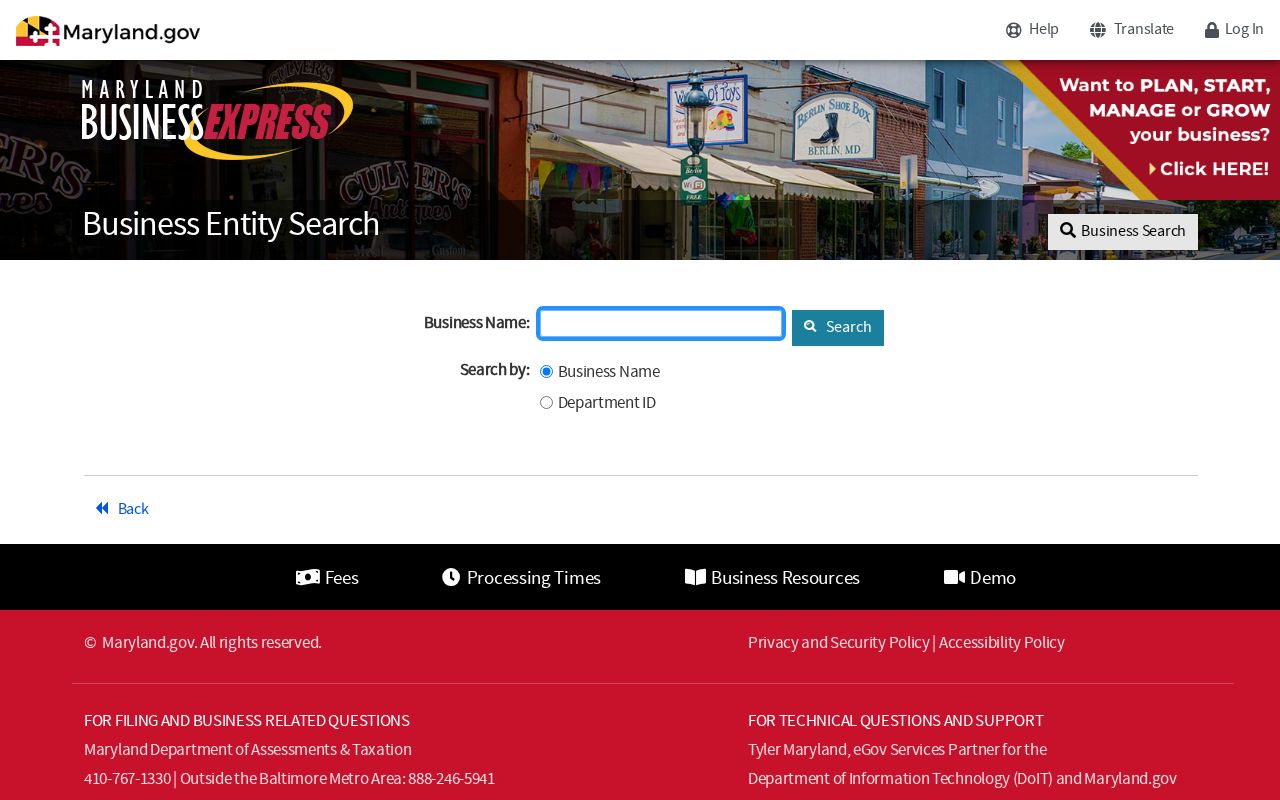
A filing-history result often leads to a document order or certificate request. Certified and noncertified options are both available. Note the date filed, film, folio, and page count beside any entity detail. The public form helps separate a business name from a person of the same name. That clarity matters before a resident lookup moves on.
Credentials follow a different path. The Maryland Department of Labor query pairs a profession with a last name. Any date fields there take YYYY-MM-DD form. Maryland OneStop routes the wider license and registration questions. A result can establish a license status or board relationship. It cannot support an inference about where someone lives.
Severn Records Beyond Portals
Portals are only one access channel. The Anne Arundel Circuit Court clerk and the courthouse public counter can supply the official case file. The counter can also point to the right department. Land-record research continues at the Land Records counter, MDLANDREC, or the Maryland State Archives. The Archives covers records older than the modern electronic range. The Archives also offers searchable finding aids and an Annapolis reference route. These cover historic land, court, probate, census, and vital material.
When an agency holds a record that is not posted, the Anne Arundel MPIA portal is the route. Pick a topic, and name the record precisely. Add contact information, and choose a fee agreement. Describe the address, account, case number, date range, and format wanted. The county acknowledges requests within 10 business days and responds no later than 30 days. Complex requests can involve notice and a consented extension.
Maryland’s Public Information Act covers existing disclosable records only. It does not force an agency to build a new resident list or answer an investigative question. The first two hours of search and preparation are generally free. Copying, retrieval, and direct costs may still apply. Redactions or exemptions remain possible even for a precise request.
Legal Limits for Severn Lookups
Some missing results are deliberate shields. Maryland Safe at Home substitutes an address for eligible people facing threats. Voter confidentiality procedures can limit public visibility. Court rules guard particular case classes. Vital-record eligibility, Driver’s Privacy Protection Act restrictions, and redactions close other paths. A public parcel address does not expose household members. It also withholds utility customers, delivery records, and motor-vehicle addresses.
Commercial people-search services sit apart from official records. Their compilations run stale, merge same-name people, or show an old address without custodial context. A wrong SDAT, court, or voter entry belongs with the agency that created it. Include the relevant account, case, or registration identifier. Removing a commercial profile never corrects the government record behind it.
Lawful use. Use Severn records for personal, lawful research such as family history, an estate question, or confirming your own information. Using a record to stalk, harass, threaten, or harm another person is prohibited.